

And how to break the cycle before it damages your relationship –
When couples speak to each other with sarcasm, contempt, raised voices, or blame, it’s easy to label it as “communication issues.” But disrespectful communication is rarely about communication alone. More often, it’s a self‑regulation problem—a moment where emotion overrides intention, and impulse overrides care.
In couples counselling, this pattern shows up again and again: two people who genuinely love each other but lose control in the heat of conflict. They say things they don’t mean. They attack instead of express. They defend instead of listening. And afterwards, they feel guilty, confused, or ashamed. If you and your partner are noticing these patterns, you may find support in Couples Counselling, where you can learn to communicate with more calm and clarity.
This article explores why disrespectful communication is fundamentally a self‑control challenge, what’s happening in the brain when partners lash out, and how couples can learn to regulate themselves so they can relate to each other with respect—even during conflict.
Why Disrespect Happens: The Science of Emotional Hijacking
Before disrespect shows up in a conversation, it often begins as a moment of internal overwhelm — a split second where emotional regulation becomes harder to access.
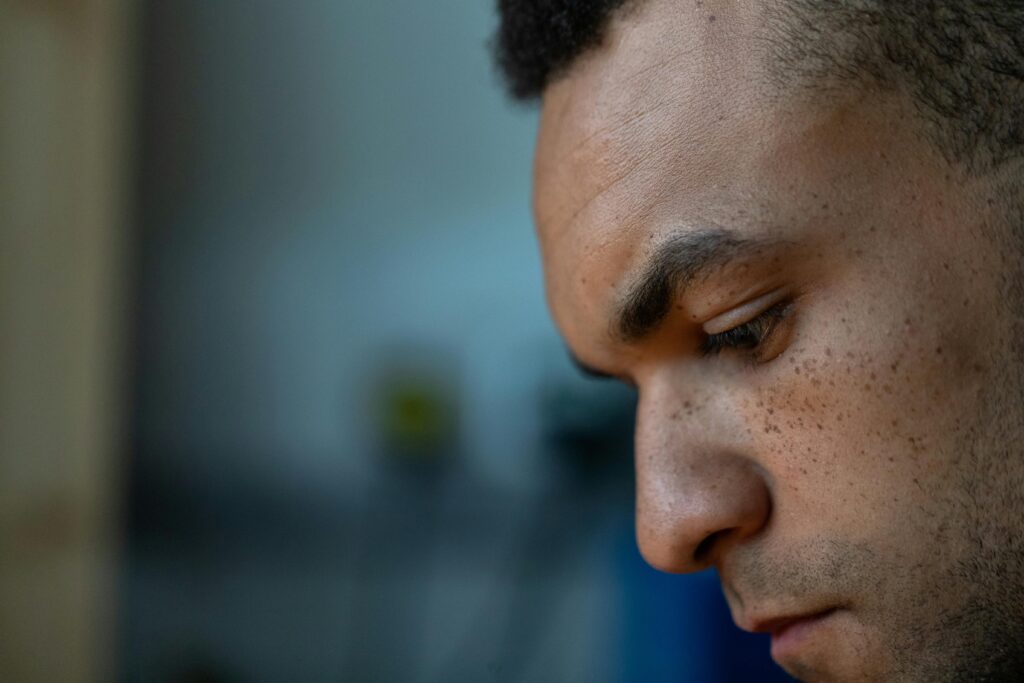
A quiet moment of emotional reflection, creating space for self‑control.
1. The brain shifts into threat mode
When someone feels criticised, misunderstood, or rejected, the brain’s threat system activates. The amygdala fires, cortisol rises, and the body prepares for defence. In this state, the prefrontal cortex—the part responsible for reasoning, empathy, and impulse control—goes offline.
This process is well‑documented in neuroscience research, including work from Harvard Medical School.
2. Disrespect becomes a coping mechanism
Disrespectful communication often masks deeper emotional experiences:
- Feeling overwhelmed
- Feeling powerless
- Feeling unheard
- Feeling afraid of disconnection
When someone doesn’t know how to regulate these emotions, they may resort to blame, criticism, or contempt as a way to regain control.
3. Poor self‑control is learned, not innate
Many adults never learned healthy emotional regulation growing up. If conflict in childhood was loud, chaotic, or avoided, the nervous system may default to the same patterns in adulthood.
The American Psychological Association highlights how early experiences shape adult emotional regulation:
This isn’t a character flaw. It’s a skill gap. These patterns often connect back to early attachment experiences, which you can explore more deeply in Attachment & Emotional Safety.
How Disrespect Damages a Relationship
1. It erodes emotional safety
Respect is the foundation of intimacy. When partners feel attacked or belittled, they stop sharing openly. They become guarded. Emotional safety collapses.
2. It creates a cycle of defensiveness
Disrespect triggers defensiveness, which triggers more disrespect. Couples get stuck in a loop where no one feels heard, and both feel wronged. If you want to strengthen healthier patterns, you may find practical tools in How to Communicate Better in Relationships
3. It rewires the relationship dynamic
Repeated disrespect teaches the nervous system to expect conflict. Over time, even neutral conversations can feel threatening.
The Gottman Institute has extensive research on how contempt and criticism predict relationship breakdown.
Why This Is Really About Self‑Control
1. Respect requires regulation
To communicate respectfully during conflict, a person must be able to:
- Pause before reacting
- Notice rising emotion
- Choose a response instead of an impulse
- Stay grounded while feeling triggered
These are self‑control skills, not communication techniques.
2. Blame is a shortcut
Blame gives temporary relief. It shifts discomfort outward. But it prevents growth and keeps the relationship stuck.
3. Self‑control is the gateway to empathy
When someone can regulate their own emotional state, they can finally:
- Listen without defending
- Validate without collapsing
- Speak honestly without attacking
Empathy becomes possible only when the nervous system is calm enough to access it.
How Couples Can Break the Cycle
1. Slow the conversation down
If emotions spike, the conversation is no longer productive. A pause is not avoidance—it’s regulation.
2. Name the emotion, not the accusation
Instead of:
- “You never listen.”
Try:
- “I’m feeling overwhelmed and I need a moment.”
This shifts the dynamic from attack to connection.
3. Build self‑control outside of conflict
Practices that strengthen emotional regulation include:
- Mindfulness
- Breathwork
- Regular exercise
- Journaling
- Therapy
- Nervous system regulation techniques
The National Institute of Mental Health outlines how these practices support emotional stability. Many of these practices are part of learning to calm your body during stress, which I explore further in Nervous System Regulation
4. Create shared rules for conflict
Couples can agree on boundaries such as:
- No yelling
- No name‑calling
- No walking away without saying when you’ll return
- No discussing sensitive topics when exhausted or stressed
Structure creates safety.
5. Repair quickly and sincerely
Healthy couples aren’t perfect—they repair. A genuine repair might sound like:
- “I’m sorry for how I spoke to you. You didn’t deserve that.”
- “I was overwhelmed and I reacted. I want to try again.”
Repair is the antidote to rupture.
FAQ — Disrespect, Communication & Self‑Control
Why do I become disrespectful when I’m upset?
Because your brain shifts into a threat response. When emotions spike, the part of the brain responsible for empathy and impulse control temporarily shuts down. This makes reactive, disrespectful communication more likely.
Is disrespect always a sign of a bad relationship?
Not necessarily. It’s often a sign of poor emotional regulation, not poor compatibility. Couples who learn self‑control skills usually see disrespect decrease dramatically.
Can people really learn better self‑control?
Yes. Emotional regulation is a trainable skill. With practice—mindfulness, breathwork, therapy, and nervous system regulation—most people can significantly improve their ability to stay calm during conflict.
What should I do if my partner speaks to me disrespectfully?
Pause the conversation, name what’s happening, and set a boundary. For example: “I want to talk about this, but not like this. Let’s take a break and come back in 10 minutes.”
When should couples seek professional help?
If disrespect becomes frequent, if conflict escalates quickly, or if either partner feels unsafe or unheard, counselling can help break the cycle and rebuild emotional safety.
Disrespectful communication doesn’t mean you’re failing as a partner; it means your nervous system is overwhelmed and doing the best it can with the skills it has. When you learn to slow down, regulate your emotions, and choose connection over impulse, everything in the relationship begins to shift. Respect becomes easier. Repair becomes quicker. And the moments that once spiralled into conflict become opportunities to understand each other more deeply. Change is absolutely possible — and it starts with small, steady steps toward better self‑control.